How to Humanize AI Text (Complete 2026 Guide)
Artificial intelligence reshaped how people write. Bloggers, marketers, researchers, students—many of them now spin up AI‑written articles and essays in minutes. Speed went up; something human went missing.
Readers pick up on that missing layer fast. A paragraph glides along, smooth on the surface, and still lands with a dull, mechanical thud. On top of that, AI detection tools scan sentence patterns, word choices, and pacing, then flag anything that feels machine‑like.
So the search phrase "humanize AI text" spreads, and turning AI output into believable prose turns into a daily job, not a niche trick. The same impulse drives searches for how to humanize AI generated text, humanize AI content, and make AI writing sound human—all pointing at the same underlying problem.

Humanizing AI writing means taking raw model output and reshaping it into prose that sounds like a person with opinions, habits, and a bit of quirk. Done well, the result reads like work from a careful writer, not an auto‑completion engine.
This guide walks through what sits under detection tools, the edits that make AI‑written material feel natural across platforms, and why the Written Fabric tool lands closer to real editorial work than generic paraphrasers.
For deeper editing playbooks, see How to Remove Robotic Tone from AI Writing and Fix Robotic AI Writing: Practical Editing Techniques.
Why AI Writing Gets Flagged
To see how to humanize AI prose, you need to know what detectors look at first.
Most detectors ignore "AI‑sounding" buzzwords. They read structure. Sentence length. Word predictability. Paragraph rhythm. Those signals stack into a probability guess: human or machine.
That basic logic sits behind most AI text detection tools—and it explains why AI writing detection and AI content detection have grown into their own corner of the publishing market. Any competent AI detector reads more than vocabulary; it reads architecture.
Perplexity—borrowed from language‑model training—sits at the center. Low perplexity means each next word follows a tight, predictable path, which suits machines. Human writers, by contrast, mix in odd phrases, specific references, and side comments that bump that metric upward.
Burstiness comes next. Human prose jumps from a five‑word line to a thirty‑word tangle, then back down. AI output tends to keep a narrow band of sentence lengths, even when the content covers different points.
Predictable structure shows up at the paragraph level. Six paragraphs in a row, each five lines long, each with a topic sentence and smooth transitions, look handy for grading software. They also look like a model printout.
Swapping "use" for "employ," or "help" for "assist," barely moves these signals. That kind of surface swap leaves the deeper patterns untouched.
Editors who want human‑sounding AI text work instead on sentence shape, paragraph breaks, tonal shifts, and places where opinion leaks through.
One trade‑off: push randomness too far and the piece starts to wobble; lean too hard on order and the detectors circle back.
What It Means to Humanize AI Writing
Humanization sometimes comes down to scrambling words until a detector gives up. The text passes the scan and still feels strange to read.
To humanize AI prose in a way that holds up, you aim lower and hit higher: you make the text sound like a specific person wrote it on a particular day. That means uneven rhythm, clear detail, different moods in different passages, and the odd, slightly crooked sentence that feels personal. The real question is never just how to make AI writing sound human for a scanner—it is how to produce human sounding AI text that holds up when a real reader sits with it.
Natural rhythm jumps out first. AI text often moves like this: "AI tools are used for content creation. These tools help users generate text quickly and efficiently." Fine. Lifeless. A human‑tuned version reads more like: "AI tools spit out a draft in seconds. Speed isn't the problem. Turning that draft into something you'd sign your name under—that's where the work sits." Short, then long, then a twist.
Specific examples pull in the reader. An AI model leans toward blank statements like "AI tools improve productivity." A working writer will narrow that to something like, "Email marketers plug prompts into AI to draft subject lines, write body copy, and spin alternate call‑to‑action phrasing in one pass." The difference shows up on the page.
Much as models keep a single steady voice, people shift tone as they go. One paragraph reads dry and practical, the next feels chatty, the next slows down to weigh a choice. Uniform tone turns into a tell. Tonal swings, handled with care, give detectors a harder job and readers an easier one.
To be sure, leaning into tone carries risk: drift too far from the subject and the piece starts to feel like an overlong side rant.
Core Techniques to Edit AI‑Generated Writing
Reciting the rules to yourself once before you start editing keeps the work anchored.
Vary sentence structure. Break the march of subject‑verb‑object. Drop in blunt three‑word sentences. Insert a question. Use an aside—then swerve. Join a pair of ideas with a semicolon rather than yet another "and." A long, clause‑heavy sentence next to a short fragment changes the energy on the page in a way detectors and humans both notice.
Cut filler. Phrases like "in the modern digital landscape," "it is important to remember," and "overall, one can see" waste space and match a pattern that scanners love to tag. Remove them and the paragraph tightens.
Add perspective. AI‑written drafts tend to list facts without saying what to make of them. A human editor drops in a line like, "For many teams, that switch feels less like progress and more like pressure," and the text stops sounding like a neutral report. Even one such sentence per section goes a long way.
Forged in frustration with AI sameness, another useful move involves breaking structural symmetry. Let a paragraph run one sentence long, then follow it with a wider one that stretches over ten lines. That jagged outline on the page hints at real drafting, not template filling.
To edit AI generated writing well, the aim is to naturalize AI generated content rather than gloss over its patterns. Humanize AI paragraphs by breaking length uniformity first, then improve AI writing tone through perspective and specific detail. Make AI generated content natural at the structural level, and surface polish follows on its own.
On that score, one blunt downside deserves mention: deeper restructuring takes more time than quick synonym swaps, and for high‑volume content farms, that delay hurts.
For more worked‑through passes, see Fix Robotic AI Writing: Practical Editing Techniques.
How to Humanize AI Text to Pass ZeroGPT
ZeroGPT pays close attention to smooth, formal exposition. ZeroGPT splits text into segments, then checks how predictable each chunk looks.

ZeroGPT, by its own design notes, pays close attention to smooth, formal exposition.
To humanize prose for ZeroGPT, start with conversational phrasing. Swap "Artificial intelligence tools are increasingly used for writing assistance" for "AI writing tools show up in blog editors, internal docs, and marketing decks now." The second sounds like someone talking in a meeting, not a brochure.
A parenthetical opener helps here: "The tricky part—and ZeroGPT leans into this—is how even the tone feels from start to finish." Short side comments like "That's the strange part" or "You'd think that would help" punch holes in the surface regularity.
Prepositional phrase first, a line like "Across a single screen of text, you want sentences that jump from short to long and back down again" breaks the drone. Mix in one fragment: "Too smooth." That little bump throws off uniform patterns.
A trade‑off shows up: swing too far toward chatty phrasing and some workplaces start to see the copy as sloppy.
How to Humanize AI Text to Pass GPTZero
GPTZero splits text into segments, then checks how predictable each chunk looks.
GPTZero splits text into segments, then checks how predictable each chunk looks.
To humanize for GPTZero, switch tone within a short span. Lay down a straight claim, then back away and show your hand. "AI tools spit out passable first drafts. To many people, that already feels like cheating." Factual point, then reaction.
A nominative absolute sharpens a transition: "The draft on screen approved, the editor leans back and starts adding their own hedge words, jokes, and small grudges." Those layered edits bump unpredictability.
Adverbial phrase of place first, a sentence like "On the surface of the paragraph, everything moves in a straight line; underneath, the small detours matter more" introduces a shift that tends to baffle pattern‑hungry models.
Drop in a one‑line paragraph somewhere in a cluster of dense ones.
Like this.
Granted, frequent tone switches can tire some readers, especially in instructional material.
How to Humanize AI Text to Pass Originality.ai
Originality.ai tends to flag formula headings and repeated keyword strings.
Originality.ai shows up a lot in publishing backends. Editors use it on SEO posts, resource pages, how‑to guides.
Originality.ai tends to flag formula headings and repeated keyword strings. Five subheads in a row that read "Benefits of…," "Challenges of…," "Future of…" sink the score. So swap "Benefits of AI writing tools" for a line with an actual claim, such as "Where AI writing tools save real time—and where they waste it." One word—"real"—already hints that someone had to make a call.
Such a shift needs support from specific examples: "One content team moved product descriptions to AI, freed two writers for landing pages, then watched returns spike because descriptions lost the small phrases buyers searched for." You get both the time gain and the SEO stumble.
A Diazeugma sentence helps: "The editor scans, deletes, rewrites, and then underlines the lines that sound like a brochure." Multiple verbs hooked to one subject match how editorial work tends to feel.
One blunt judgment fits here: generic SEO fluff misses the mark.
For a full rundown, see AI Humanizer for SEO Articles.
How to Humanize AI Text to Pass Grammarly AI Detection
Grammarly's detector leans toward 'does this sound like a person who writes email for a living'.
Grammarly's detector leans toward "does this sound like a person who writes email for a living" rather than "does this match a model output chart."
Perfectly polished paragraphs, with classic textbook transitions and every comma in place, trigger warnings more often than slightly uneven ones. Someone who writes real email lets a rough edge through now and then.
To humanize text for Grammarly AI Detection, drop the heavy linkers. Swap "furthermore" and "moreover" for "also" or nothing at all. Let two sentences sit next to each other without a neat bridge.
A Hypophora works well: "Why do some drafts pass the detector with no tweaks? The text carries small slips in rhythm and word choice that no style guide would recommend." Posed question, simple answer.
A metalinguistic adverb doesn't hurt: "Frankly, a line that sounds like a policy memo from the 1970s sets off alarm bells before any AI check even runs." That word "Frankly" comes from a human mouth.
One trade‑off: writers who grew up on formal essay rules sometimes resist cutting those connectors, even when the end result reads cleaner.
How to Humanize AI Text to Pass Quillbot AI Detection
QuillBot's detector grew up next to a paraphrasing tool that swaps synonyms in and out.
QuillBot's detector grew up next to a paraphrasing tool that swaps synonyms in and out.
Short of turning sentences upside down, many people run AI drafts through paraphrasers that only change individual words. QuillBot's detector looks for that pattern: same structure, new nouns.
To humanize for QuillBot's AI Detector, rebuild ideas at paragraph level. A Past Participle phrase helps: "Pulled apart and re‑stitched, the section on email sequences moves from bullet steps to a story about one specific campaign." Rather than "Step 1, Step 2, Step 3," you walk through an event.
With that in mind, change the order. Start with the downside, then back into the process: "Open rates dropped twenty percent after the AI edit; the team later realized they had removed the small product jokes their audience liked." New structure, same topic.
QuillBot still nails text that only shuffles a clause or two, so half‑measures fall short.
For a discussion of tools, see AI Humanizer vs Paraphrasing Tool and AI Humanizer vs ChatGPT Rewriting.
How to Humanize AI Text to Pass Copyleaks
Copyleaks looks at entropy, word spread, and sentence shape across long stretches of text.
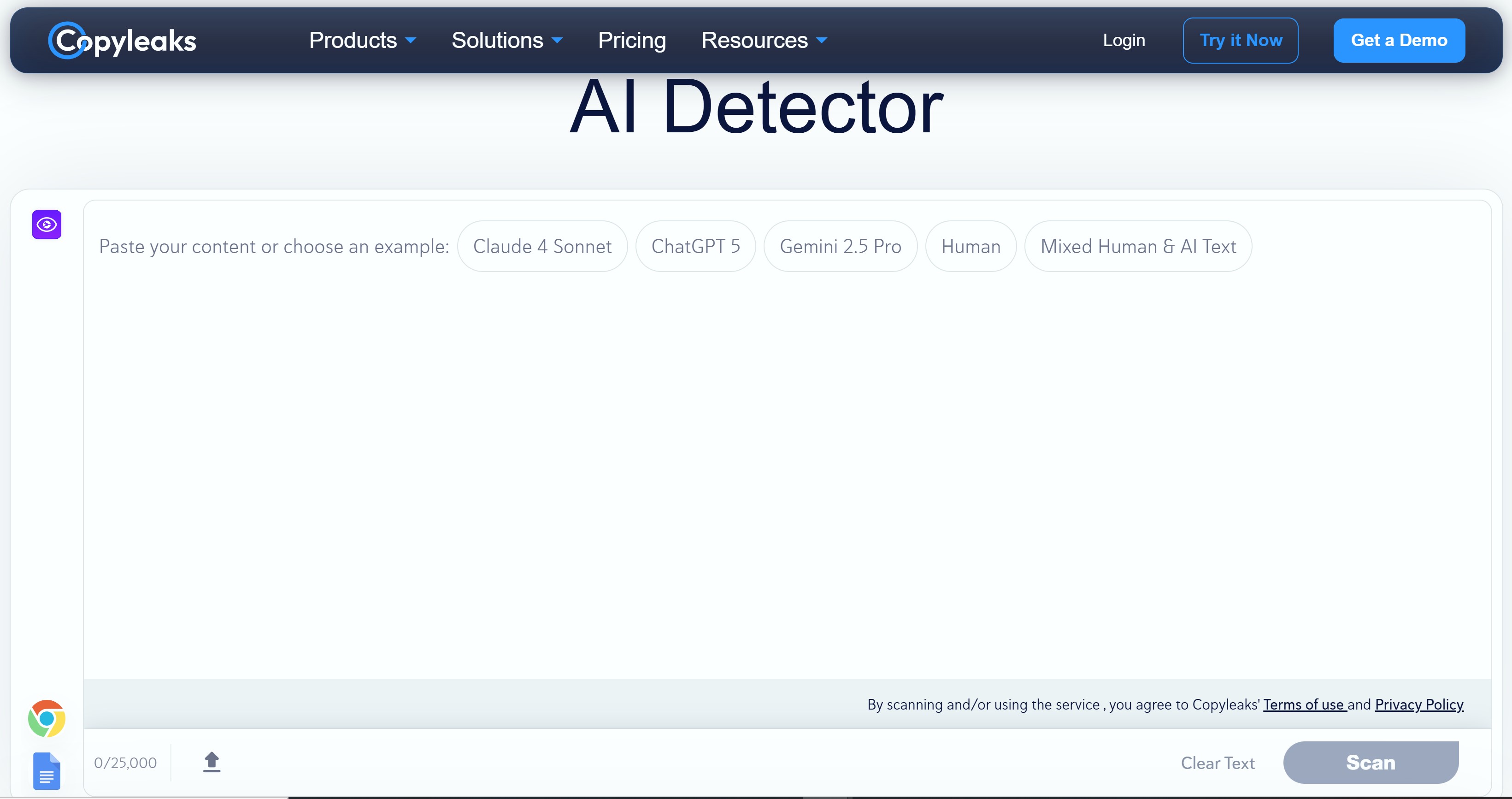
Copyleaks shows up in legal departments, HR teams, classrooms. It looks at entropy, word spread, and sentence shape across long stretches of text.
In any event, rows of sentences with matching length and mood ring alarm bells. Repeated turns of phrase—"in conclusion," "as a result," "on the other hand"—start to form a pattern on their own.
To humanize for Copyleaks, reshape paragraphs, not individual sentences. A Gerund phrase opener works: "Breaking a long paragraph into two or three uneven chunks gives readers more air and gives detectors less to hold on to." Then add an interpretive aside: "One chunk might carry a story, the next a blunt takeaway, the third a question you leave hanging."
Prolepsis also plays well: "You may argue the cost in editor hours runs too high, but compare it with the cost of a flagged whitepaper sitting in a compliance queue for a week." The anticipated objection plus concrete delay shifts the feel away from machine drafting.
Trade‑off: more restructuring increases the chance of human error, like losing a reference or mis‑ordering a step.
How to Humanize AI Text to Pass NoteGPT
NoteGPT tends to grade study notes and summaries in bullet-point format.
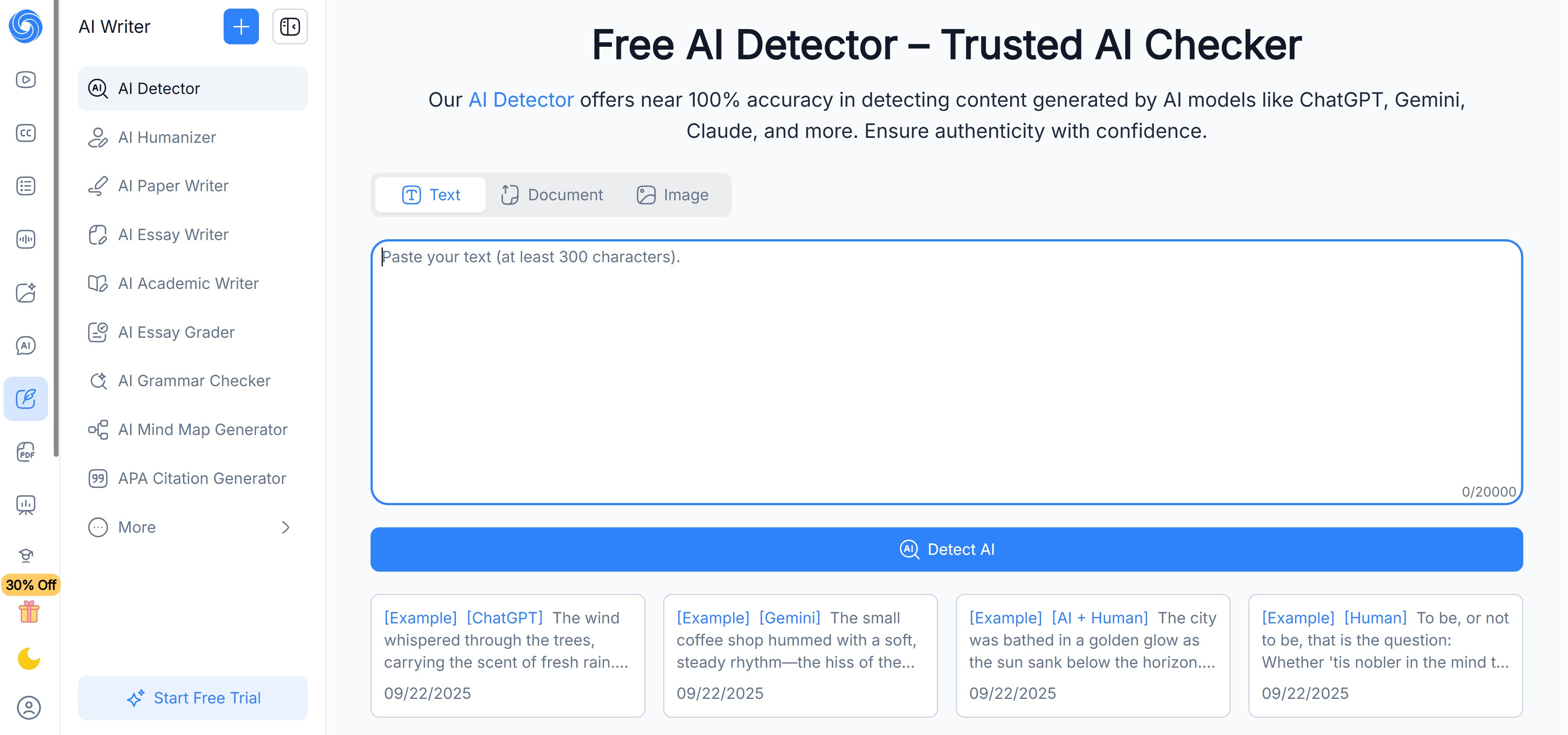
NoteGPT tends to grade study notes and summaries. Many AI tools spit out those in bullet‑point format with standard "Overview / Key Points / Conclusion" framing.
And so it began, not with a bang, but with another five‑bullet summary that looked like homework.
To humanize for NoteGPT, break the tidy list. Between bullets, tuck small lines of commentary. "Chapter 3 covers supply and demand. Weirdly, the part students remember tends to be the gas price story, not the graphs." Facts, then a shrug.
A temporal clause adds movement: "The moment the lecture ends, students scroll through AI‑made summaries that line up all the points in the same order as the slides." Reverse that order in your write‑up. Lead with the bit people argue about, drop the rule later.
Verbless fragment image: "Midnight. Highlighters, cold coffee, half‑finished outline." That kind of note shows someone stayed up and thought about the material.
One clear drawback for short‑form notes: extra commentary lengthens study time, and not every student wants more to read.
How to Humanize AI Text to Pass Turnitin
Turnitin dominates plagiarism and AI checks in schools.

Turnitin still dominates plagiarism and AI checks in schools. It reads essays built to meet rubrics: clear thesis, body paragraphs of similar length, balanced argument, tidy close. Students who need to humanize AI essays, or submit AI generated essays without triggering a review, face the strictest pattern‑matching of any detector on this list.
To humanize AI‑assisted essays for Turnitin, lean into uneven development. A Synesis‑style sentence helps: "Neither rigid structure nor neat topic sentences were enough to make the paper feel written by a person." A paragraph with three quoted lines from a text followed by close reading looks different from a generic "point‑example‑explanation" loop.
Bring in specific material. "In an essay on political theory, a student who quotes Hannah Arendt on banality, then compares that to a local news story, writes in a way no base model would reach for on its own." That mismatch between source and example trips up uniformity.
As to academic risk, teachers still hold strong opinions on AI use, and some will dock work that sounds even slightly machine‑touched.
For more ideas tailored to coursework, see AI Humanizer for Students.
How to Humanize AI Text to Pass Quetext
Quetext flags boilerplate phrasing and generic explanations.
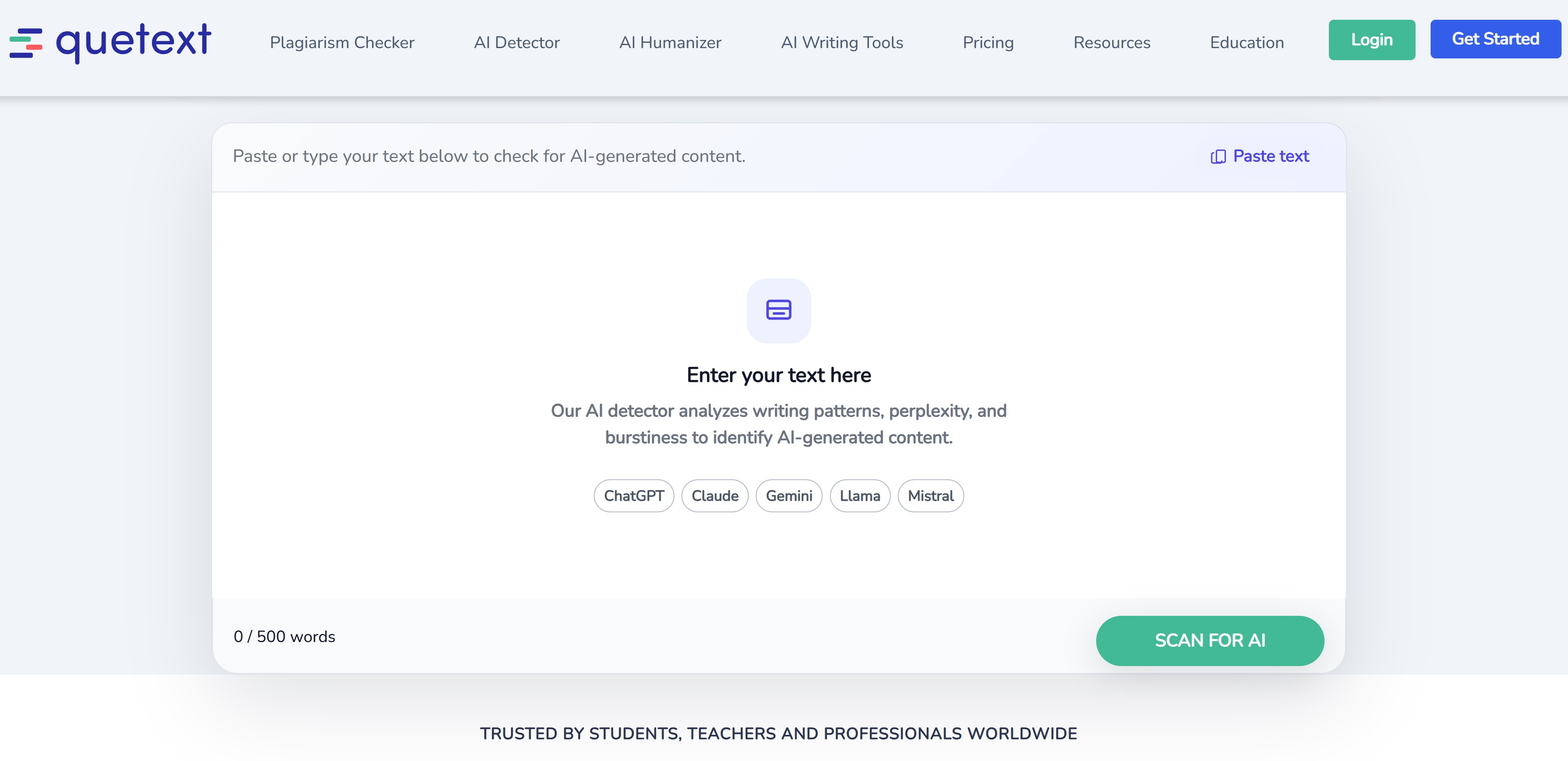
Quetext started with plagiarism checks and later picked up AI detection. It flags boilerplate phrasing and generic explanations.
Beneath the veneer of clean subheads and tidy paragraphs, AI‑written posts on the same topic often lay out the same structure: definition, benefits, challenges, future trends. Quetext reads enough of these to notice.
To humanize for Quetext, rewrite at the structure level. With "What" for emphasis: "What throws Quetext off balance isn't a new synonym; it's a different way of lining up the points." Swap order. Put the odd edge case before the main rule. Or open with a question from a real client, then answer it with theory later.
Parenthetical opener: "The plan—and it might annoy template lovers—means discarding the neat outline you got from the prompt and building your own." Paragraphs in the same article can follow different shapes: story, then point; question, then list; blunt claim, then single supporting line.
A blunt downside: this sort of rewrite demands higher skill, so not every writer on a team pulls it off at the same level.
Why Most AI Humanizer Tools Fall Short
Most so‑called AI humanizer tools online work like word‑slot machines. Your text goes in, the system swaps nouns and verbs, shuffles word order, and sends out a "new" paragraph with the same skeleton underneath. Much of what these tools process falls into familiar buckets: AI generated articles on product topics, marketing copy, and AI generated text from academic or professional settings.
QuillBot‑style paraphrasers do this openly; lesser clones copy the pattern. Run a paragraph through, and you get lines like "implement" turning into "execute," "key" changing to "crucial," "method" shifting to "approach," sometimes with strained synonyms that sound like a bad thesaurus.
Fear it was that drove teams toward these short cuts; fear of being flagged.
That said, these tools leave structural fingerprints untouched: same sequence, same number of sentences, same transition flow. Detectors that read more than word choice still raise scores. Readers, for their part, run into phrases that feel off, especially in idioms.
On that front, meaning drift creeps in. A simple phrase like "push back" might morph into "repulse," which flips tone from mild disagreement to open disdain.
At any rate, content teams who bank only on surface swaps end up with text that feels unnecessary at best and broken at worst.
For a comparison across services, see Best AI Humanizer Tools for Blog Writers.
Crafted, Not Spun
Your text sounds like it was thoughtfully written, not algorithmically produced.
Distortion-Resistant by Design
Rewrites the structure, not just the surface, so detectors stay blind.
Authentic Human Voice
Preserves tone, intent, and style so it sounds like an expert wrote it.
Editorial-Grade Quality
The end result reads like polished professional writing, no edits needed.
Written Fabric: A Different Kind of AI Humanizer
The Written Fabric humanizer takes a different route. Rather than chase detector quirks, it leans into how editors work on drafts. The Written Fabric AI humanizer—also positioned as a Written Fabric AI writing tool—treats editing as an editorial act, not a mechanical swap.
A parenthetical sentence helps frame this: "The tool—the one called Written Fabric—treats your draft like something an editor would fuss over, not like a list of tokens to scramble." Instead of random synonym swaps, it looks at rhythm, sentence flow, vocabulary clusters, and clarity in one sweep.
To understand this shift, you'd need to picture a real editor: they shorten sentences before changing words, swap examples before hunting for new adjectives, and cut any line that repeats an earlier point. Written Fabric follows that order by design.
A nominative absolute shows the end result: "Voice tuned, arguments intact, the new draft sounds closer to how a decent writer would talk through the topic over coffee." No wild swings in word choice, no broken meaning.
As such, detection resistance comes as a side effect, not the headline. Text with irregular rhythm, lived‑in phrasing, and interpretive asides matches human writing samples more often, which makes scoring tools hesitate.
By the same token, no automated editor hits every note. Some subject‑matter quirks still need a human who knows the field.
Some days, you read a Written Fabric output and think, "Good enough." That thought counts more than a score readout.
Building a Humanization Workflow at Scale
For teams that lean on AI‑generated drafts weekly, one‑off fixes take too long; a workflow helps.
The decision made, the first step lands at the prompt. A prompt that names audience, tone, and concrete details like "include one real software brand" yields material closer to what editors want. One content lead asked for three customer stories per article and watched editing time drop by a third.
From there, structure comes first. Editors adjust sentence length, cut filler intros, split or merge paragraphs, and insert occasional one‑line reactions. Vocabulary tweaks follow, not lead.
A Past Participle phrase sets the stage: "Stripped of its generic opener, the intro paragraph starts with a customer problem instead of a definition." Over time, those choices build a house style people recognize.
Trade‑off: deeper edits slow volume, so managers need to choose which pieces deserve the full pass.
As it happens, one plainspoken habit helps more than any trick: someone on the team reads the final draft out loud before publishing and cuts every line they would feel silly saying to a client.
Why Written Fabric Holds Up Over Time
Short of guessing every move detection tool makers plan, Written Fabric bets on one stable target: human reading habits.
Reciting sentences with a steady beat, flat tone, and repeated patterns wears thin after a page or two; anyone who survived a dry corporate manual knows that. Written Fabric stirs in offbeat signals by design: a run‑on next to a fragment, a specific brand name, a side‑eye comment about a common marketing fad.
Gerund phrase as subject: "Sliding a joke in next to a statistic breaks the monotony that AI text falls into so easily." A reference to Bruce Lee teaching Jeet Kune Do principles flips a dry training article into something closer to lived conversation.
You may argue the comparison feels odd, but human readers often latch onto those small cultural hooks.
Under the circumstances, structural humanization works better than any temporary trick aimed at this month's detector update.
A Few Odd Human Touches That Go Further Than You'd Expect
As to random detail, small, slightly strange words help more than polished metaphors. Drop "kumquat" into a story about someone labeling test files, and people raise an eyebrow: "The intern named each AI draft after a fruit—apple, banana, kumquat—so the team could track experiments without thinking about which version came first." No model reaches for that specific fruit on its own every time.
What finally broke the run of sameness in one client's FAQ page was a single, offhand movie nod: "No, we don't offer a 'one plan rules them all' deal—this isn't The Lord of the Rings." Readers who know the reference smile; others keep reading without pause.
In the economy of human emotions, gratitude often looks like extra effort on one line no one paid for.
A mention of Marie Curie in a piece on research tools lands in a similar way: "A team chasing citations without reading full papers would have driven Marie Curie up a wall." History, brought in sideways, thins out the robot feel.
Such tweaks feel small on their own. Yet stacked up—odd fruit, stray movie, stern scientist—they turn a sterile draft into something a person in a hurry still recognizes as written by another person in a hurry.
One client even snuck in a passing note about an axolotl as a mascot for their AI‑editing team and printed a tiny version on their internal style guide.
Start humanizing content for free with Written Fabric without compromising on quality. Get 50 free credits when you sign up via Google
LET'S GO!